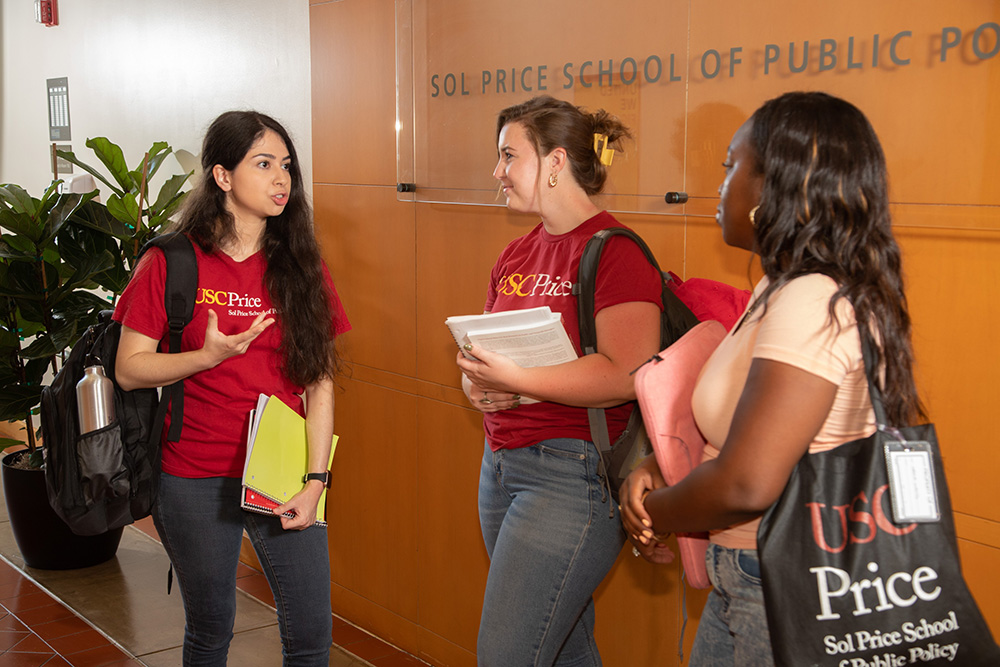
The Master of Public Policy (MPP) program at the USC Sol Price School of Public Policy has received a STEM designation recognizing its strength in quantitative analysis, research methods and evidence-based public policy solutions.
USC Price is now home to one of the nation’s leading STEM-designated MPP programs at a school consistently ranked among the top five in public affairs. The designation means the program’s quantitative, data-driven curriculum is now recognized by the U.S. Department of Homeland Security as a STEM degree.
The designation reflects how the program has evolved for a world in which policy decisions are increasingly shaped by artificial intelligence, big data and rapid technological change. Students learn to turn complex information into practical policy solutions for governments at every level, nonprofits and businesses.
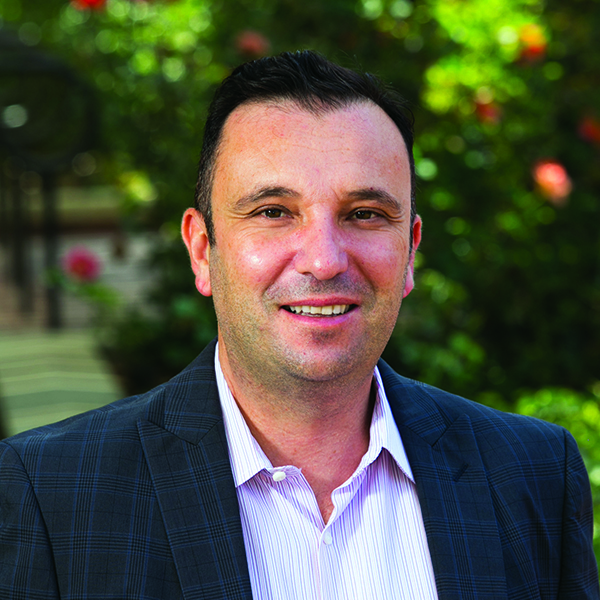
“This designation affirms what has long been central to the USC Price MPP: rigorous analysis in service of the public good,” said Antonio Bento, Professor of Public Policy and Economics and Director of the MPP program. “Our students learn to work with big data, use emerging AI technologies responsibly, evaluate which policies work and turn evidence into recommendations that communities and decision-makers can act on.”
The STEM designation will strengthen the MPP program’s ability to attract talented students from the United States and around the world while preparing graduates for increasingly analytical roles in government, consulting, research, nonprofit organizations and the private sector.
“At its best, public policy brings technical excellence together with a deep understanding of people and institutions,” Bento said. “This designation recognizes the strength of that combination at USC Price and opens the door for future students to extend its impact.”
Building the skills to shape policy in a changing world
Through courses, electives and hands-on labs, MPP students learn to uncover patterns in large datasets, code in Python, estimate how policies affect people’s lives, and assess whether public programs are delivering results. They also learn to question the data, identify what it leaves out, and turn their findings into clear recommendations leaders can use. Students apply these skills to climate change, housing affordability, education, inequality, economic opportunity, transportation and other defining policy challenges.
That training comes together in the two-semester Policy Analysis Practicum, which operates much like a consulting engagement. Student teams work directly with government agencies, nonprofit organizations and private-sector clients to define a policy problem, analyze evidence and deliver recommendations the client can act on.
In a recent practicum, for example, four MPP students partnered with the Congressional Research Service to study the financial health of private-sector retirement plans. The team compiled, cleaned and analyzed a complex federal dataset containing millions of data points and covering hundreds of thousands of retirement plans. Their findings gave the nonpartisan research arm of Congress new information for tracking national pension trends and evaluating policies affecting Americans’ retirement security.
A global community strengthens public policy
The STEM designation may allow eligible international graduates in F-1 status to apply for a 24-month extension of post-completion Optional Practical Training, potentially providing up to three years of work authorization in the United States.
“As someone who came to the United States as an international student, this designation is especially meaningful to me,” Bento said. “International students bring knowledge, experience and perspectives that strengthen our classrooms and deepen the impact of our work. For eligible international graduates, the additional opportunities associated with a STEM degree can change the trajectory of their lives. It can give future students more time to apply what they have learned and contribute their talent, skills and global perspectives to organizations and communities across the United States—strengthening the country’s capacity to solve complex public problems.”
Global engagement is essential to the school’s educational mission, said Christopher Boone, Dean of the USC Price School and C. Erwin and Ione L. Piper Chair.
“For decades, USC Price has welcomed students and public-service professionals from around the world,” Boone said. “They bring different experiences, challenge familiar assumptions and help us understand how policy choices affect people across borders and communities. By learning with and from people whose lives have been shaped by different institutions, cultures and public challenges, we develop better questions and more effective solutions. That is fundamental to our mission to improve the quality of life for people and their communities, here and abroad.”