Building Relationships, Developing Leaders and Bringing Public Safety Professionals Together
Interviewed by Jessie Redd
For Dr. Erroll G. Southers, effective public safety leadership starts with one thing: relationships.
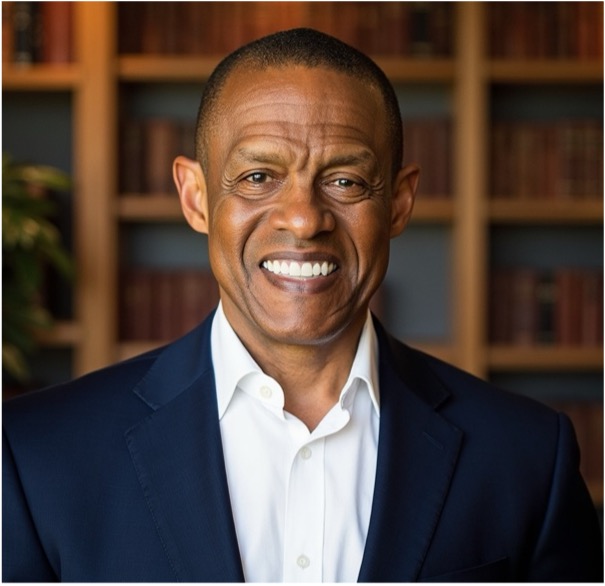
Southers brings decades of experience across law enforcement, national security, academia and the private sector to the USC Public Safety Leadership Program (PSLP). A former FBI Special Agent and Santa Monica Police Officer, he currently serves as USC’s Associate Senior Vice President of Safety and Risk Assurance and Professor of the Practice in National and Homeland Security at the USC Price School of Public Policy.
When asked what public safety leaders need most to be successful today, his answer was immediate.
“My one-word answer to that would be relationships,” Southers said.
He emphasized that today’s leaders should not expect their careers to follow a traditional path.
“There is no linear pathway to leadership anymore,” he said. “My career is a shining example of there not being a linear path, but it works.”
For Southers, strong relationships are especially important in public safety, where leaders routinely need to work across agencies, disciplines and sectors. The goal, he said, is to be able to walk into a room and already know the people you may need to work alongside.
That philosophy is also one of the reasons Southers believes PSLP offers a unique experience. Rather than bringing together professionals from a single discipline, the program intentionally includes participants from across the broader public safety community.
“I like the fact that you are not homogeneous with regards to your attendees,” Southers said. “You are interdisciplinary.”
He explained that responding to complex public safety challenges requires perspectives from multiple organizations and professions.
“You can’t have a room full of firefighters or a room full of police officers or a room full of attorneys,” he said. “You’ve got a room full of everybody in the community responsible for mitigating that event, responding or recovering to that event.”
That diversity of experience creates an environment where participants can learn not only from instructors, but also from one another.

“When you have ten people addressing a problem, you have ten possible solutions,” Southers said. “It doesn’t mean that any solution is more right or wrong than the other one. It’s just different.”
Those connections can continue long after a cohort ends. Southers said he regularly hears from PSLP participants who have maintained relationships with people they met through the program and later brought those connections back to their own organizations.
“You help those people start to form those relationships they’re going to need for the rest of their careers because they’re meeting people outside their space that they wouldn’t normally meet,” he said.
A Lifelong Approach to Leadership
Southers also encourages emerging and established leaders to remain lifelong learners.
“No one knows everything,” he said. “What we do today is so fluid and so dynamic, and you could be an expert in that space today and tomorrow, it’s totally different.”
His advice is to remain open to new ideas, strategies, systems and processes.
“You’ve got to understand that you’re learning all the time.”
That perspective extends to emerging technology. As students increasingly ask Southers what they should study so artificial intelligence does not replace their jobs, he encourages them to look at AI differently.
“They should be thinking about AI enhancing their skill set,” he said, rather than approaching the technology from a place of fear.
Despite changes in technology and the public safety landscape, Southers remains encouraged by the people who continue to pursue careers in public service.
“People still want to serve in public institutions. They still want to learn,” he said. “I’m encouraged by that.”
Through PSLP, Southers helps ensure that those professionals have an opportunity to learn together, build relationships outside their traditional circles and develop the connections they may one day rely on when it matters most. The experiences behind those leadership lessons extend far beyond the classroom, and Southers is now sharing that journey in his new memoir.
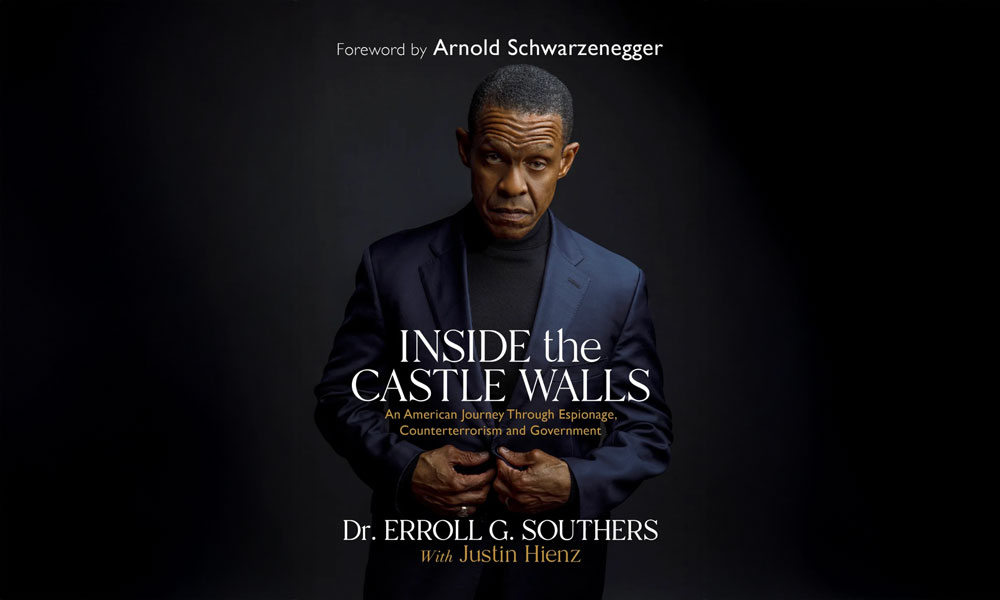
For those interested in learning more about Dr. Southers’ journey, his new memoir, Inside the Castle Walls: An American Journey Through Espionage, Counterterrorism and Government, takes readers through the experiences that shaped his approach to leadership and public service. The book traces his path from being profiled by police as a young man to a career spanning law enforcement, the FBI, counterterrorism, national security, academia and executive leadership.
At the heart of the book is advice Southers received from his father: “You can’t change the castle from outside the moat.” That lesson became a guiding principle throughout his career and reflects many of the themes he continues to share with the next generation of public safety leaders.
We encourage PSLP participants, alumni and members of the broader public safety community to check out Inside the Castle Walls to learn more about Dr. Southers’ story and the experiences behind the lessons he brings into the classroom.
Learn more about Inside the Castle Walls and Dr. Southers’ journey:
Inside the Castle Walls